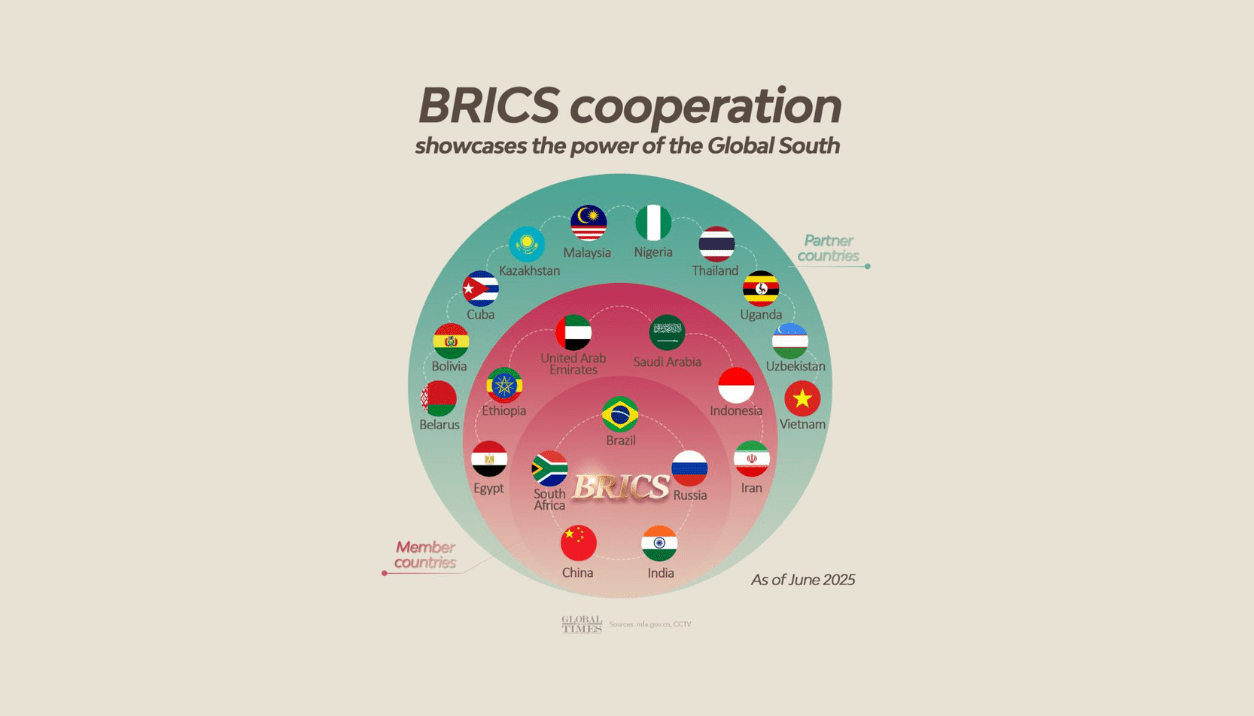
Since returning to office, Donald Trump has turned BRICS into a geopolitical flashpoint. He’s accused the grouping now expanded to include Iran, UAE, Egypt, and others of attempting to dethrone the U.S. dollar. His response? Threats of sweeping 10% to 100% tariffs on any country supporting what he calls “anti-American financial aggression.”
Trump’s concerns are not unfounded. The U.S. dollar still accounts for 58% of global foreign exchange reserves and is involved in 88% of all forex transactions worldwide. Losing that status would erode America’s ability to borrow cheaply and weaponize its financial system through sanctions. Trump sees the rise of an alternative BRICS-backed currency as a direct economic and strategic threat.
Speculation around a BRICS common currency surged after Brazil’s President Luiz Inácio Lula da Silva called for one in 2023. However, by the 2025 summit, Brazil, now BRICS chair explicitly confirmed that a joint currency was “not on the agenda.
The idea, while symbolically appealing, is economically fraught. BRICS members differ widely in inflation, trade balances, and fiscal policy. A shared currency would require tight macroeconomic convergence and a joint central bank—conditions far from reality. For now, the bloc is focusing on more immediate goals: expanding trade in local currencies and building independent payment systems, especially to shield themselves from dollar-driven volatility.
India’s Calculated Distance
India has taken a clear, data-backed position against a BRICS currency. External Affairs Minister S. Jaishankar noted in 2025 that “India has never been for de-dollarization, and there is no proposal for a BRICS currency.”
India’s resistance is rooted in both numbers and national interest. With a $3.7 trillion economy, it is now the fifth-largest in the world and growing at over 7% annually. However, over $127 billion of Indian exports go to the U.S. each year, making New Delhi reluctant to jeopardize its Western trade relationships.
India has also overtaken China as the world’s most populous country, with 1.43 billion people as of 2023. Yet, its GDP is just one-fifth of China’s, making New Delhi wary of entering a shared economic arrangement where Beijing’s dominance could tilt the balance. Instead, India is pursuing bilateral rupee trade agreements, particularly with Russia, as a more measured path to financial diversification without surrendering autonomy.
A Bloc of Scale, Not Symmetry
The expanded BRICS bloc now represents 40% of the world’s population and roughly one-third of global GDP. This demographic and economic heft strengthens its call for a fairer financial system. Western sanctions on Russia in 2022, and repeated Fed rate hikes since, exposed how vulnerable emerging markets are to dollar-based shocks.
Russia and China, in particular, have fast-tracked alternatives. The yuan now dominates China-Russia trade, and both countries have begun settling energy transactions outside the dollar. Meanwhile, the BRICS New Development Bank is issuing loans in local currencies. But for many, like South Africa and Brazil, the focus remains on enhancing autonomy, not creating a supranational currency.
New Member

Dollar’s Dominance Faces Gradual Strain
Despite growing resistance, the dollar’s role as the world’s default currency remains entrenched. Yet the shifts are visible. BRICS countries are slowly reducing their dollar reserves, while local currency trade between members is rising year-on-year, albeit from a small base.
The creation of a common BRICS currency may remain elusive, but de-dollarization by increments is already underway. India, for instance, has identified 17 countries for potential rupee-based trade, while China expands yuan-based oil transactions.
Trump’s protectionist posture may stall some BRICS initiatives, but it won’t reverse the underlying trend. BRICS nations want greater monetary independence not necessarily from each other, but from a system where one country holds too much power.
For India, the BRICS currency debate isn’t just about ideology, it’s about maintaining strategic balance. While the country supports reforms in global finance, it is unwilling to compromise its monetary sovereignty or risk tensions with key Western partners. As BRICS inches toward de-dollarization, India will likely benefit from reduced global reliance on the U.S. dollar in the long term but without aligning too closely with China-led financial architecture. The current trajectory allows India to participate selectively, trade more in rupees, and strengthen its global economic role without losing control of the steering wheel.